
A cutter that outruns the washer behind it looks great on a spec sheet. On the floor, it just builds a pile of glass waiting in line, collecting dust.
Washing, cutting, handling, spacer application, insulating, laminating, and finishing all have to work together, at the right speed and in the right order, for the glass you actually run. When one stage is out of step, everyone on the floor feels it as waste, safety risk, or a bottleneck.
Your Goals Decide What the Line Needs
Before choosing any equipment, start with what you want the business to do. Your product mix, target output, and growth plans decide which stages matter most.
A high-volume IG shop needs spacer application and insulating to keep pace with cutting. An architectural laminator needs tight control over every step before the autoclave. A specialty fabricator running small custom orders cares more about quick changeovers than top speed. Two shops with different goals should never end up with the same line, even if they cut the same glass.
A Line Is Only as Good as Its Weakest Match
Every step depends on the ones around it. If a cutter outpaces the washer, glass piles up and sits exposed to contaminants. A washer set up for float glass may streak or scratch soft coatings on Low-E glass before it ever reaches the IG line. Undersized handling and lifting equipment is often where breakage happens.
Every machine in the line should share data, match throughput, and fit the footprint of your plant. Eliminating manual handoffs between stations gives your crew more time to watch the process and catch problems before they turn into scrap. That compatibility is why Billco emphasizes synchronization as much as machine capability.
Where Configuration Decisions Pay Off
Washing. Throughput, water and energy use, and coating compatibility all vary by the glass you run. A line mixing float and coated glass needs different brush pressure, drying, and handling than a single-product shop. The wash also decides whether laminating and insulating bond properly downstream. Residue from cleaning solution, adhesive, or oils picked up during handling can cause IG seal failure. A weak wash does more than slow you down. It plants a defect that may not surface until the unit is installed and fogging years later. Washers with closed-loop filtration and heat recovery also cut water and energy costs, and the savings grow with volume.
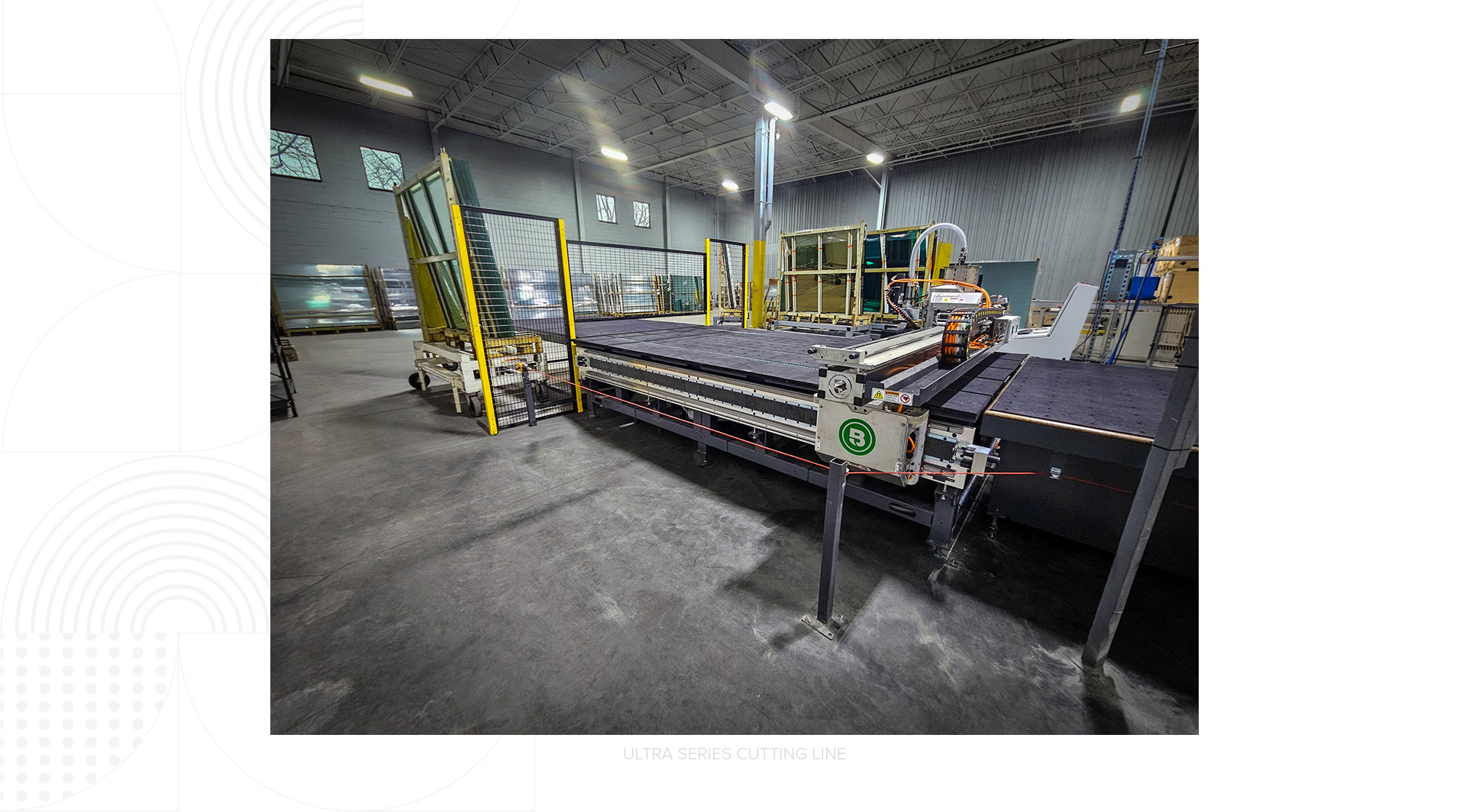
Cutting. The cutter has to match the stages on either side of it. An under-spec cutter becomes your bottleneck. An over-spec cutter means paying for speed you will never use.
Handling. This is where safety and waste meet. Facilities have cut their breakage rates from 4.2% to 1.8% within six months of installing automated cutting and handling equipment (Bureau of Labor Statistics). Large glass moves safely only with redundant vacuum systems, power-off holds, and properly sequenced buffer storage. On a well-configured line, these features are standard, not optional.
Spacers and Insulating. Spacer application speed, sealant application, and gas-fill capability (such as argon) all need to match your performance targets and energy code requirements. A mismatch shows up later as seal failures and warranty claims, not just slower output. A 25-year field study by the Insulating Glass Manufacturers Alliance found that units built and certified to the highest industry standard failed at roughly 3.6%, versus 14% or more for units certified to a lower tier. That gap shows what a properly configured insulating stage is worth.
Laminating. Cleaning, layer assembly, heating, and pre-pressing all happen in a tight sequence before the autoclave. Automation removes the variation that comes from operator fatigue or differing techniques. The capacity of this stage also needs to fit the rest of the line, so it never sits idle or holds everything else up.
Edgeworking. Edging, drilling, sandblasting, tempering, and printing are where products set themselves apart. A line built for standard sheet sizes looks very different from one built for furniture glass, safety glazing, or decorative architectural work. If you run standard IGUs most of the week and a specialty laminated order now and then, plan for quick changeovers. Long changeovers are lost capacity, even on a fast machine.
How Billco Approaches Configuration
Billco has spent more than 75 years designing and building American-made equipment for flat glass fabricators. Our catalog covers custom washers, cutting systems, handling equipment, insulating presses, laminating lines, and loading and storage systems. Our machines average a service life of more than 20 years.
We start with your goals, then map how glass should move from loading to final product. We look for where glass waits, where it gets handled by hand, and where one stage is working harder than the next. Then we work out a layout that fixes those problems and fits your space.
You will work with our solution specialists, engineers, and service team, from equipment customization and scalability planning to fabrication and delivery logistics. The right layout today should leave room to grow, so a change in product mix or volume does not mean ripping out equipment that was only sized for day one. We back it with 24/7 support to keep unplanned downtime low, plus refurbished pre-owned systems and upgrades for fabricators who want to modernize part of their line.
How to Come Prepared
You don’t need to be a glass processing engineer to start this conversation. A few answers will get you to the right layout faster:
- What are your goals for the business? Where do you want to be in five years?
- What are you making? Standard flat lites, architectural IGUs, laminated safety glass, furniture or frameless glass, or a mix. This alone determines which stages matter most.
- What is your target throughput? Sheets or units per hour or shift, today and in two years.
- What happens to the glass before and after washing?
- Where are your bottlenecks or safety concerns? If you are upgrading a line, the people running it every day usually know exactly where the weak link is.
- How much automation fits your labor model? More automation means less manual handling and fewer errors, but it also changes training and maintenance needs.
The Bottom Line
Line configuration decides your waste rates, your safety record, your throughput ceiling, and your cost per finished piece for the life of the equipment. Most problems trace back to the same few causes: mismatched equipment, manual handling where automation should be, and stages that were never set up for the glass running through them.
The fabricators who get the most from their equipment bring their goals and daily realities to the table. Then they work with a manufacturer who will solve the layout with them instead of selling from a fixed catalog.
Whether you’re planning a new facility, expanding capacity, or upgrading a bottlenecked stage of your existing line, Billco’s Solution Specialists will work with you to map your production goals to the right equipment. Start the conversation: 724.452.7390

