

Setting 2026 Goals: A Glass Manufacturer’s Guide
The difference between staying where you are and achieving real growth often comes down to one thing: clear, measurable goals. Defining specific objectives and measurable goals helps track progress and evaluate success. This difference separates vague improvement from clear timeframes, percentages, and other quantifiable metrics.
As you plan for the year, consider some of the main priorities that leading glass manufacturers are focusing on, and how you can refine these goals to support your business vision.
Improve Energy Efficiency
Energy consumption is a major operational expense for every fabricator. Reducing consumption lowers overhead and supports sustainability efforts.
- Conduct an Energy Audit: Assess your current consumption patterns to identify inefficiencies. What consumes the most power? Where is energy being wasted? Which processes can improve the most?
- Train Operators: Educate your team on energy-saving practices, such as proper equipment startup and shutdown procedures, optimizing operations, and reducing idle time on the production line.

- Upgrade Equipment: Replace old, inefficient machinery with modern, high-performance solutions designed to lower energy usage and operating costs. Systems such as Billco’s Lami Line are designed to reduce wasted heat, optimize power distribution, and improve process control.
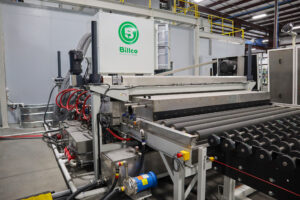
The Lami Line can function as either a pre-heat oven or a main laminating oven. It utilizes multiple independently controlled heat zones, allowing fabricators to apply energy only where and when it is needed. Each zone is equipped with solid-state-controlled quartz infrared emitters, which improve reliability while reducing electrical loss.
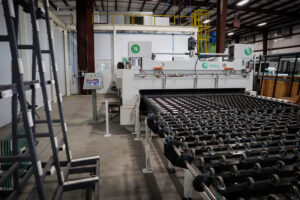
Heating is regulated through automatic louver assemblies, rather than cycling heaters on and off. Emitters retain energy while in use, and temperatures are controlled by adjusting louver positions. This results in smoother control and reduced energy spikes. Individual zones can be shut down when not in use, further minimizing unnecessary power consumption. Auto-shutdown and continuous conveyor operations prevent idle heating, while optional forced recirculation convection air improves heat uniformity for coated glass without power input. Together, these features embody Billco’s Energy-Saver Concept, delivering faster heat transfer and lower long-term operating costs.
Reduce Material Waste
Material waste impacts profitability, sustainability, and operational efficiency. Each lite that goes unused means lost revenue, higher disposal costs, and unnecessary environmental impact.
 Optimize Cut Patterns: Optimizing cut patterns is one of the best ways to reduce material waste. Cutting software can determine the most favorable sheet utilization, reducing scrap while maintaining throughput.
- Save and Reuse: Integrating automated remnant recovery solutions such as Billco’s Remnant Storage System provides significant gains in material utilization. The system automatically captures, organizes, stores, and retrieves reusable offal lites. By tracking remnant size, type, and age, the system prioritizes and ensures reintroduction into the cutting process without leaving scraps or losing material quality.
 Optimize Cut Patterns: Optimizing cut patterns is one of the best ways to reduce material waste. Cutting software can determine the most favorable sheet utilization, reducing scrap while maintaining throughput.
Automated remnant handling reduces reliance on manual labor, improves workplace safety, and eliminates the need for traditional rare racks. Gentle glass handling preserves the integrity of reclaimed lites while the system’s ability to store multiple remnants per slot and accommodate large-format and low-use glass types maximizes storage efficiency. These features improve cutting yields, streamline operations, and deliver immediate financial and environmental benefits.
Boost Throughput and Quality
Improvements in throughput and quality directly impact profitability and customer satisfaction. Review production flow to identify bottlenecks, manual interventions, and inconsistent processes. This allows manufacturers to target areas where automation and system integration can yield better results.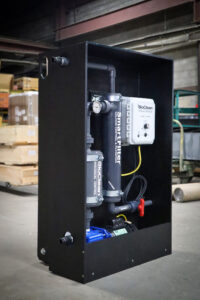
- Maintain Equipment: Proactively schedule a maintenance check with one of our support specialists to ensure your equipment is operating at peak performance. Regular inspections, calibration, and restoration to factory specifications, when needed, maintain throughput gains and extend equipment life.
- Improve Equipment: Upgrading key process equipment to enhance reliability and consistency is crucial for achieving better throughput and quality. Incorporating the Billco BioClean Water Care System provides an automated approach to maintaining washer tank cleanliness and high-water quality.
The BioClean system uses the oligodynamic effect to introduce controlled levels of copper and silver ions into the washer water, reducing bacteria, slime, and organic fouling. Unlike UV-based solutions, the recirculated ions reach all wet surfaces in the washer tanks and splash zones, preventing buildup that can cause spotting, contamination, and inconsistent cleaning results. By continuously sanitizing, the BioClean reduces the need for chemicals, minimizing manual tank cleaning and lowering the chances of re-washes due to water-related defects.
The fully automated BioClean system allows precise calibration to reduce labor demands, shorten maintenance cycles, and keep washers running longer. Cleaner tanks protect downstream equipment, leading to better product quality and more consistent production rates.
Conclusion
Identify your key performance areas, assess current metrics, and set new targets. Define what success would look like, then attach measurable indicators to track your progress. For instance, if your plant struggles with wasted time, aim to reduce downtime by 10% over the next 6 months. Create guidelines to achieve that goal, such as upgrading equipment, replacing parts, or providing operator training, based on where you are falling short.
Whether you want to grow your business footprint, reduce waste, or simply improve operations, Billco is here to help you reach those goals. For over 75 years, Billco has been engineering custom solutions for glass fabricators of all sizes. When your operators work smarter, safer, and more efficiently, we know we’ve done our job.
Let’s make 2026 the most productive year yet!

